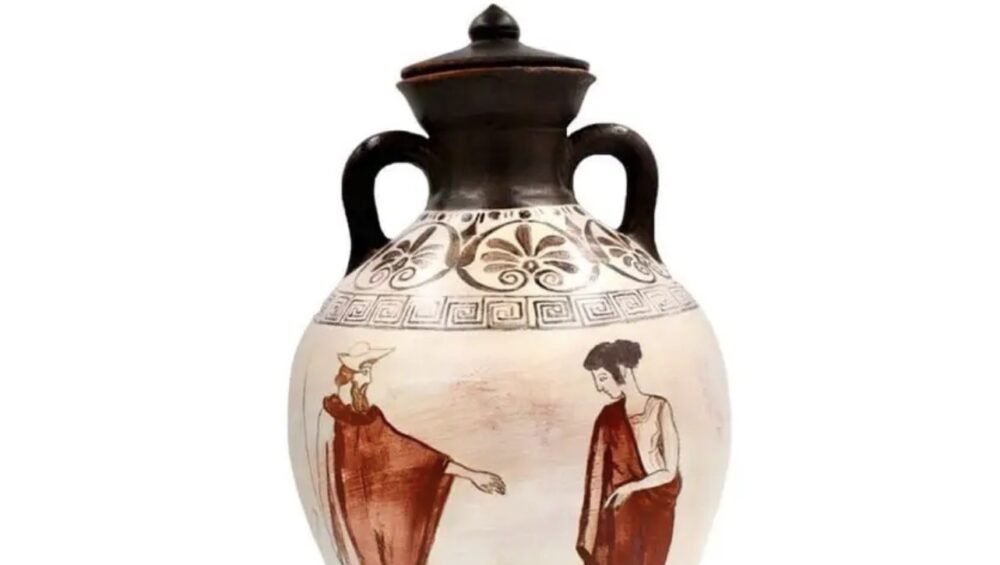
HANDMADE URNSCategoriesASHTANKS

Urn Price. How much should it cost?

Urn Price and How to Choose One


By searching the internet or talking to funeral homes, we will find many urns at different prices.

When we talk about urns, we're not just talking about an object.

We are talking about a final act of respect. And yet, even at this moment, a practical question arises: how much does it cost?;

The answer is not unambiguous — because here "cost" meets "value.".


How much does an urn cost?

In the Greek market, prices are as follows:

Basic options: €50 – €150

(simple metal or wooden containers)

Middle class: €150 – €400

(marble, better finishes, discreet aesthetics)

Luxurious options: €400 – €1,000+

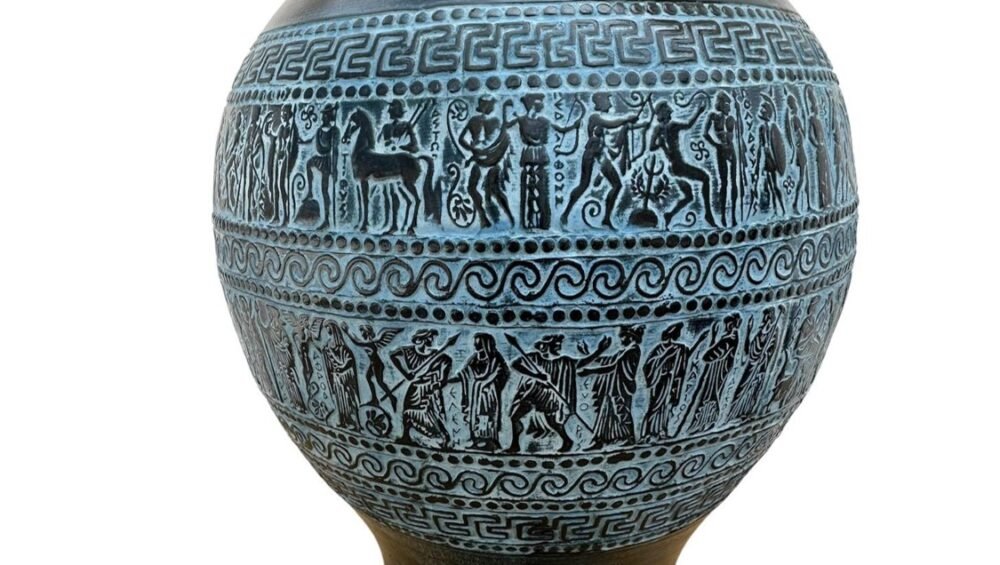
(handmade, ceramic, painted, artistic, personalized)

Simply put:

A decent, balanced cost for most cases ranges around €200 – €600.

What determines the price?

The price of an urn is not random. It is determined by:

Material:

Marble and bronze raise the cost, wood and aluminum lower it.

Construction:

Mass production or handmade work.

Design:

From simple to artistic.

Personalization:

Engravings, names, dates.

It's like choosing a memory book: another with a plain cover, another with a hardcover edition with a dedication.

Cost or value?;

Here lies the essence.

An urn is not an investment with a financial return — it is an investment in memory.

—and the living need symbols, points of reference.

So the question shifts:

not "how much does it cost", but "what do we want it to express".
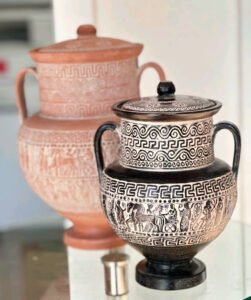
TEFRODOXOI.GR ΧΕΙΡΟΠΟΙΗΤΟΙ ΤΕΦΡΟΔΟΧΟΙ
HANDMADE CERAMIC ASHTANKS

Practical guidance

To put it simply and clearly to every audience:

If you want functionality → €50 – €150

Maybe you want a balance of quality and aesthetics → €200 – €400

But if you want intense symbolism and uniqueness → 400€+


At the end of the day, the urnurn it's a small object with a lot of weight — not material, but emotional.

And perhaps a simple, human phrase fits here:

«"The person leaves, but the way we remember him remains."»

The cost is measured in euros.


But the memory, never!
tefrodoxoi.gr
Handmade urns
ΣΚΑΛΙΣΤΟΙ ΤΕΦΡΟΔΟΧΟΙ ΣΤΟ ΧΕΡΙ...CategoriesASHTANKS

Urn: a conscious choice of memory and respect

Urn: a conscious choice of memory and respect

from: tefrodoxoi.gr

We avoid words that bring us closer to the most difficult truth of life. We avoid talking about loss. "Cream" belongs to these words.

But it does not hide coldness. It expresses a deep human need: to give meaning to farewell.

 We choose, we are not afraid

Today, in Greece, we do not treat cremation as taboo. We choose it more and more often.

We are changing our lifestyle. We are moving. We live in different cities, different countries. Within this new reality, we are looking for solutions that allow us to keep our people close.

We don't avoid the decision. We make it consciously.

 We transform memory into presence

We do not treat the urn as an object; we transform it into a point of memory.

We hold the person we loved close to us. We create a personal space of connection. We choose where and how we honor them.

We don't just follow formal procedures; we give meaning.

After all, as popular wisdom says, "a person lives as long as you remember him.".
And we choose to actively remember.

 We respect without conflict

The Orthodox Church supports burial as an act of faith and tradition.
The State, with Law 3448/2006 and subsequent regulations, establishes cremation as an option.

We don't choose sides. We respect people.

We don't clash values. We synthesize realities.

 We face the truth of the times

Think about a family living in different countries. He can't take care of a grave. He cannot maintain a daily presence.

The urn doesn't just simplify a process. It preserves the relationship.

It enables people to carry memory with them — not as a burden, but as a continuation.

We recognize the feeling and move on.

We don't make decisions about death easily. We hesitate, we think, we ache.

Others find solace in the urn. Others feel distance.

We don't judge — we understand.

Because we don't just manage a process; we give meaning to a farewell.

We keep the noun

We do not hold a person in either the grave or the urn.
We keep him in our memory.
We hold him with love.
We hold him with the moments we lived.

We choose the method; but the essence does not change.

We don't treat the urn as a break with the past. We use it as an act of respect in the present.

We hold fast to something more important: the dignity of farewell.

Because in the end, our choices about death do not define us;
We are defined by the way we loved.

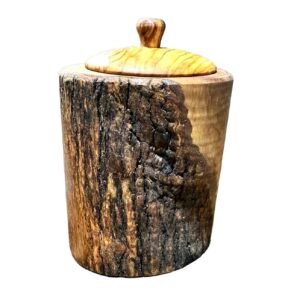
τεφροδόχος από Ελιά
TEFRODOXOI.GR