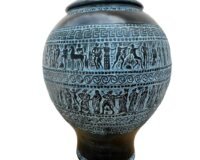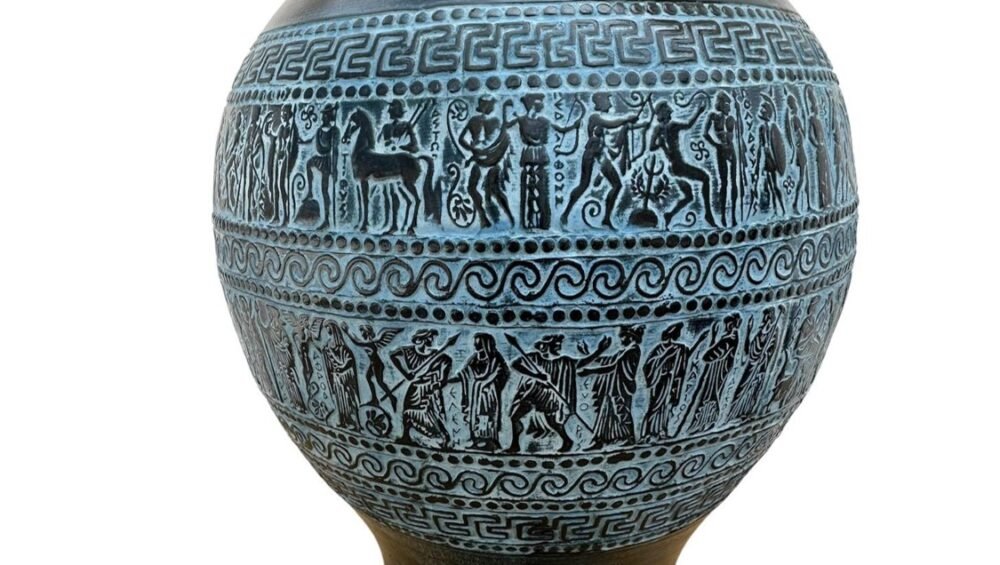
ΣΚΑΛΙΣΤΟΙ ΤΕΦΡΟΔΟΧΟΙ ΣΤΟ ΧΕΡΙ...CategoriesASHTANKS

Urn: a conscious choice of memory and respect

Urn: a conscious choice of memory and respect

from: tefrodoxoi.gr

We avoid words that bring us closer to the most difficult truth of life. We avoid talking about loss. "Cream" belongs to these words.

But it does not hide coldness. It expresses a deep human need: to give meaning to farewell.

 We choose, we are not afraid

Today, in Greece, we do not treat cremation as taboo. We choose it more and more often.

We are changing our lifestyle. We are moving. We live in different cities, different countries. Within this new reality, we are looking for solutions that allow us to keep our people close.

We don't avoid the decision. We make it consciously.

 We transform memory into presence

We do not treat the urn as an object; we transform it into a point of memory.

We hold the person we loved close to us. We create a personal space of connection. We choose where and how we honor them.

We don't just follow formal procedures; we give meaning.

After all, as popular wisdom says, "a person lives as long as you remember him.".
And we choose to actively remember.

 We respect without conflict

The Orthodox Church supports burial as an act of faith and tradition.
The State, with Law 3448/2006 and subsequent regulations, establishes cremation as an option.

We don't choose sides. We respect people.

We don't clash values. We synthesize realities.

 We face the truth of the times

Think about a family living in different countries. He can't take care of a grave. He cannot maintain a daily presence.

The urn doesn't just simplify a process. It preserves the relationship.

It enables people to carry memory with them — not as a burden, but as a continuation.

We recognize the feeling and move on.

We don't make decisions about death easily. We hesitate, we think, we ache.

Others find solace in the urn. Others feel distance.

We don't judge — we understand.

Because we don't just manage a process; we give meaning to a farewell.

We keep the noun
We do not hold a person in either the grave or the urn.
We keep him in our memory.
We hold him with love.
We hold him with the moments we lived.

We choose the method; but the essence does not change.

We don't treat the urn as a break with the past. We use it as an act of respect in the present.

We hold fast to something more important: the dignity of farewell.

Because in the end, our choices about death do not define us;
We are defined by the way we loved.

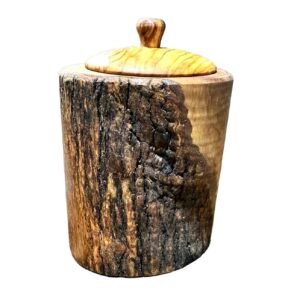
τεφροδόχος από Ελιά
TEFRODOXOI.GR
CategoriesASHTANKS

Good Friday: where silence becomes prayer

Good Friday: where silence becomes prayerfrom: tefrodoxoi.gr

We experience Good Friday as a time when everything seems to stop.

We lower our voices, slow our steps, and, without fully realizing it, we turn our gaze inward. We arrive at the time of the burial.

The New Testament narrates that moment without noise and describes the moment with silence and respect: «And Joseph took the body… and laid it in a new tomb» (cf. Matt. 27:59-60).

We don't gather a crowd. We don't raise our voices. We stand, a few people, stretch out our hands and express a profound act of love.

Within this simplicity we discover a truth that concerns us all: The greatest moments in life don't make noise.

We do not view the burial of Christ merely as an event. We experience it as an image that reflects every human loss.

Who hasn't stood, at least in their own minds, in front of a "tomb"? Who hasn't experienced an end, a loss, a moment where everything seemed to fade away?;

And yet.

We do not stop at the Cross and we do not stay in the tomb.

In the grave of that day we do not see the end. We understand the grave as a place of waiting and imagine it as the earth that holds the seed until it brings it back to life.

The evangelist notes something simple but profound: «it was Friday» (Jn. 19:42). We understand that we are in preparation.

And here we reveal the meaning. We do not experience Good Friday as the end of history; we cross it as a threshold.

We often fear the darkness. But the Gospel whispers to us that we can see it as a passage and shows us that silence does not mean absence but rather gives rise to anticipation.

We stand before the Epitaph and we do not just honor a sacrifice. We recognize our own need for hope.

Because, as the popular wisdom says, «no tear is wasted.» Somewhere, at some point, there is light.

And perhaps this expresses the most human message of the day: even when everything seems closed, life opens a way.

We don't try to explain Good Friday. We feel it.

We don't try to explain Good Friday. We feel it.

Because through the silence of the grave...
the strongest hope is born.

Happy Good Friday.

χειροποιητό ζωγραφιστό τεφροδόχος
WWW.TEFRODOXOI.GR