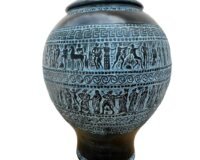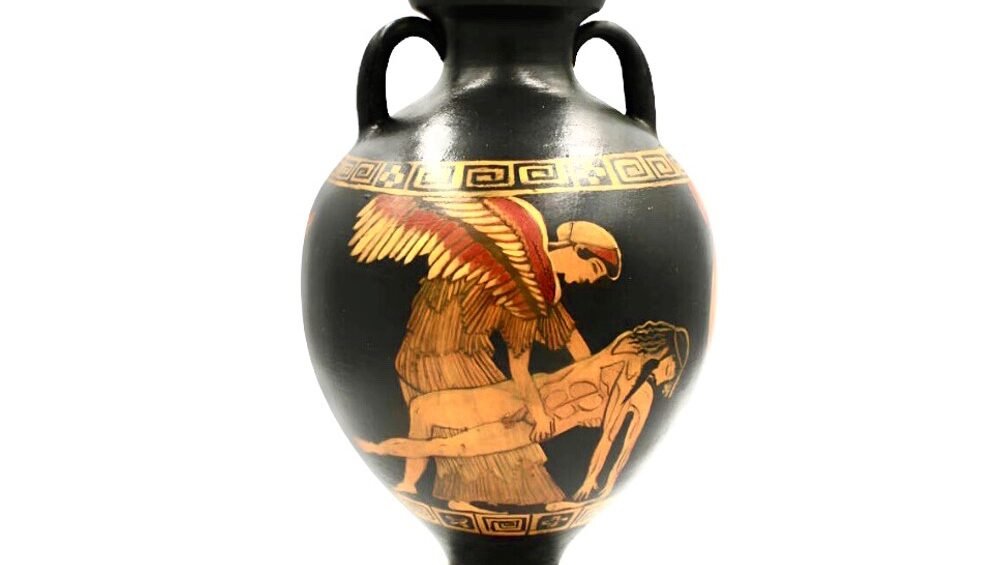
χειροποιητό ζωγραφιστό τεφροδόχοςCategoriesURNS

Since when have people cremated the dead throughout the centuries: History and evolution | Tefrodoxoi.gr

Since when have people cremated the dead throughout the centuries: History and evolution

From Tefrodoxoi.gr

Since when have people cremated the dead throughout the centuries and how have people evolved this practice to this day? Societies have been practicing cremation for thousands of years and are constantly changing the way they perceive it.

In this article, we examine when people began cremation, how it was used in ancient times, why it was reduced in the Middle Ages, and how it is being revived in modern times. We also connect the historical trajectory with the current services offered by tefrodoxoi.gr.

When do people start cremating the dead?;

When did they first implement cremation?;

Historians trace the practice of cremation to humans as early as the 2nd millennium BC. Ancient societies burned their dead in special ceremonies.

Why did the ancients people choose cremation?;

People choose cremation because:

  • they believe they are freeing the soul
  • avoid health problems
  • honor the dead in a ritualistic way
  • facilitate the management of corpses

Therefore, burning acquires practical and symbolic value early on.

How they used cremation in ancient Greece and Rome

How did the ancient Greeks practice cremation?;

The ancient Greeks practiced cremation during specific periods, mainly during wars. At the same time, they also maintained burial as an alternative practice.

How did the Romans organize the cremation of the dead?;

The Romans:

  • they build cremation pyres
  • collect the ashes in urns
  • create family monuments
  • honor the dead with public ceremonies

Thus, they reinforce cremation as a basic burial practice for centuries.

Why societies reduced cremation in the Middle Ages

How does it affect Christianity the practice?;

Christianity strongly influences burial practices and societies are mainly oriented towards burial.

Why are people abandoning cremation?;

Societies reduce combustion because:

  • the church rejects the practice
  • people associate the body with the resurrection
  • traditions shift towards burial

Therefore, cremation almost disappeared in Europe for many centuries.

When does cremation return in modern times?

When will people bring back cremation?;

Societies brought back cremation in the 19th century, when science and hygiene influenced perceptions.

Why is cremation increasing today?;

People choose cremation because:

  • reduce burial costs
  • save space
  • simplify procedures
  • respect environmental concerns

At the same time, modern crematoriums organize the process safely.

 How tefrodoxoi.gr connects history with modern times

How does modern times use the urn?;

Modern society uses the urn as a basic element of memory. tefrodoxoi.gr designs urns that connect tradition with modern aesthetics.

How does the market evolve needs?;

People today:

  • choose personalized urns
  • they ask for different materials
  • they emphasize aesthetics and emotion

Therefore, the urn acquires a personal character.

How modern cremation works today

What steps do crematoriums follow?;

People organize the process into specific stages:

  1. gather the necessary documents
  2. they transport the body to the crematorium
  3. carry out combustion at high temperatures
  4. collect and process the ash
  5. they deliver the urn to the family

How safe are incinerators?;

Modern incinerators:

  • control emissions
  • they apply strict protocols
  • protect the environment

How societies react to cremation today

 How do people view cremation?;

Societies express different opinions, but acceptance is steadily increasing.

 Why do perceptions change?;

People change their attitudes because:

  • cities are limiting burial spaces
  • technology is evolving
  • the update is increasing
  • society emphasizes choice

Since when do they cremate the dead?;

People begin cremation in the 2nd millennium BC.

Why did people stop cremation in the Middle Ages?;

Societies adopt burial due to religious and social changes.

Why is cremation making a comeback today?;

People choose cremation for economic, practical, and environmental reasons.

Humans have been using cremation for thousands of years and are constantly changing the way they do it. From ancient times to the present day, societies have adapted the practice to their needs and values.

The tefrodoxoi.gr connects this historical course with modern reality and offers solutions that respect memory and aesthetics.

Ultimately, people continue to choose ways to say goodbye that express respect, simplicity, and meaning.
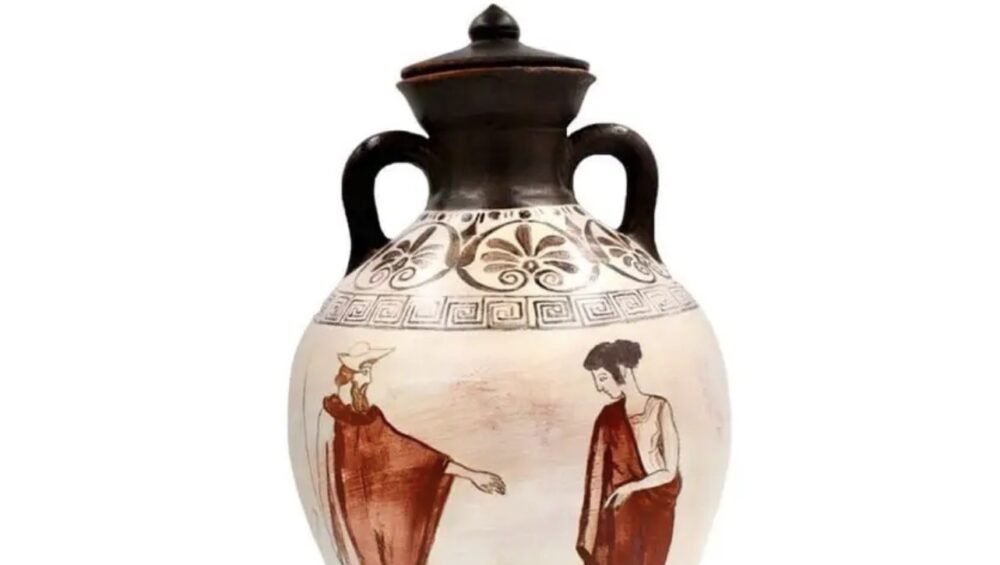
HANDMADE URNSCategoriesURNS

Incinerator Burning Processes: What You Need to Know

What exactly happens during the cremation process and why are more and more people choosing it?;

From: Tefrodoxoi.gr

Cremation is a modern, practical and often more economical option compared to traditional burial. At the same time, cremation offers flexibility and simplicity at a difficult time.

In this guide, we will answer key questions, break down the stages of the cremation process, and explain everything you need to know so you can get a clear picture and make informed decisions.

 What is Incineration?

How is cremation defined?;

Cremation is the process by which the human body is reduced to ash through high temperatures. Experts use modern cremation furnaces, ensuring controlled and safe conditions.

Why do people choose cremation?;

What are the main reasons for choice?;

  • Many are looking for a simpler process
  • Others want lower costs
  • Some prefer a more ecological solution

In addition, incineration offers greater flexibility in terms of ash management.

Are there cultural or religious differences?;

Yes, and they are important. Some religions fully accept cremation, while others consider it unacceptable. Therefore, before making a decision, it is a good idea to consider personal and family beliefs.

 How an Incinerator Works

 What equipment does he use?;

A modern incinerator uses:

  • High temperature furnaces (800–1000°C)
  • Gas filtration systems
  • Automated control systems

Thus, the process remains safe and environmentally controlled.

 How is the process progressing?;

Let's see step by step:

  1. Body preparation
  2. Placement in the combustion chamber
  3. Start of combustion
  4. Cooling of the remains
  5. Conversion to ash

Consequently, each stage is carried out with precision and respect.

Is the procedure safe?;

Of course. Modern incinerators implement strict safety protocols. In addition, they use filters that significantly reduce emissions.

 The Stages of the Combustion Process in Detail

What happens before combustion?;

Before the cremation process begins, those responsible:

  • They check the necessary documents
  • They prepare the body
  • They remove objects that are not allowed

So, the process begins with organization and formality.

Is there a farewell ceremony?;

Yes, if the family wishes. Many choose to have a short ceremony before cremation. This way, they create a personal and meaningful farewell.

What happens during combustion?;

During combustion:

  • The body is exposed to high temperature
  • Tissues gradually break down
  • Only bones remain

Then, experts process the remains to turn them into fine ash.

What happens after burning?;

After completion:

  • The ash is collected
  • Placed in an urn
  • Delivered to relatives

Thus, the process is completed with respect and discretion.

 Legal Framework and Procedures in Greece

 Is cremation allowed in Greece?;

Yes, cremation has been legal in Greece for the past few years. However, specific procedures are required.

 What documents are needed?;

Usually required:

  • Death certificate
  • Medical certificate
  • Declaration of cremation wishes

Therefore, bureaucracy remains manageable but necessary.

Handmade urns
tefrodoxoi.gr

 Who makes the decision?;

The decision may be based on:

  • At the request of the deceased himself
  • In the decision of relatives

Consequently, a clear statement of desire helps significantly.

Advantages and Disadvantages of Combustion

 What are the main advantages?;

  • Lower cost
  • Flexibility in ash management
  • No burial space required

Furthermore, the process is completed quickly and simply.

Are there any disadvantages?;

However, for many the advantages outweigh the disadvantages.


 Frequently Asked Questions about Cremation

 How long does the process take?;

It usually takes between 1.5 and 3 hours. However, the total time may vary.

 Can relatives attend?;

Yes, many crematoriums allow the presence of relatives in special areas.

What about the ash?;

Ash can:

 Is it an ecological choice?;

To a large extent, yes. Modern systems reduce emissions, making incineration more environmentally friendly.

The cremation process combines technology, respect and simplicity. Although it is a sensitive issue, proper information helps us approach it with calmness and understanding.

Ultimately, what matters more? The way we say goodbye or the memory we leave behind? The answer is different for everyone. However, it is worth considering all the options and consciously choosing what meets your own values and needs.

Handmade urns. Τεφροδόχοι χειροποίητοιCategoriesASHTANKS

Mom… how do you choose an urn?;

«Mom… how do you choose an urn?;»

from: tefrodoxoi.gr

— Mom…
— Yes?;
— How do you choose an urn?;

(silence)

— I don't know if there's a right answer to this...
— Me neither.


Σκαλιστοί τεφροδόχοι tefrodoxoi.gr
tefrodoxoi.gr


-Mom? Did you look on the internet?;

– Yes

— And?;
— I didn't distinguish any. They looked the same to me.

— I thought you just pick one and that's it.
— I thought so too.

— But that's not true, is it?;
— No…

— What confused you the most?;
— I don't know what I consider "right.".

— Is there a right one?;
— I don't think so…

— Do you want something simple?;
— Maybe…
— Or something more special?;
— I don't know… it depends.

— From what?;
— From how I remember him.

— I want something calm, mom.
— Yes… me too.

— I don't want anything unpleasant.
— Me neither.

(pause)

— Did you see the ceramics?;
— Yes… I saw them.
— I liked them.

— Why?;
— I don't know… I felt something.

— What did you feel?;
— I felt an earthly calm.

— Like they're just standing there?;
— Yes… exactly.

(pause)

— Can I tell you something?;
— Tell me.

— I think you'll understand when you find her.
— So?;

— You won't think about it too much.
— Will it come naturally to me?;
— Yes.

(pause)

— Mom…
— Yes?;

— Can we keep her here?;
— At home?;
— Yes, mom…

(a little silence)

— If that makes you feel closer… I want it too.

Some choices are not made with instructions.

They are not explained.

They happen within a conversation.
In a silence.
In a moment when something "clicks".

And then you know.

What does a child feel when they lose a parent?

Does he understand the loss?;

A child does not perceive death like an adult. At young ages, it is difficult to understand that the absence is permanent.

Waiting for the parent's return, She asks when she will see him again and imagines he left for a while.. In this way he protects himself from a pain that he cannot yet bear.

The silence that says more

Why doesn't the child express himself?;

The child does not always express strong emotions. He continues playing, appears calm, or withdraws.

With this attitude he tries to deal with the loss. He doesn't avoid the pain; he just hasn't found a way to express it yet. He keeps what he feels inside until he can express it.

The fear that arises after loss

How does the sense of security change?;

The child loses a sense of stability when they lose a parent. They don't just lose a person; they lose the foundation that gives them security.

He is afraid. He wonders if he will lose the other parent, if he will remain safe, and if he can trust the world around him. Even when he does not express these thoughts, he carries them inside and changes his behavior.

Anger as an expression of pain

Why is the child reacting strongly?;

The child expresses his pain through anger. He reacts, shouts, moves away or questions those around him.

He's not trying to provoke. He's trying to endure. Anger acts as an outlet for the tension he can't handle otherwise. Behind every reaction lies deep sadness.

The guilt that weighs silently

Can the child feel responsible?;

The child often associates the loss with himself. He believes that he did something wrong or that he could have prevented what happened.

In this way, he tries to explain something he doesn't understand. For this, he needs to hear clearly and repeatedly that he bears no responsibility.

The sadness that comes and goes

Why does his mood change so quickly?;

The child does not remain in sadness all the time. He goes from playing to crying and back again.

With this alternation, he protects himself. He doesn't forget the loss; he simply regulates the intensity of the pain so that he can manage it.

Absence in everyday moments

When does the loss become more intense?;

The child feels the absence most intensely in the simple moments of everyday life. He wants to talk and can't find the parent. He wants to share a joy and can't.

In these moments, he understands loss again. He feels the emptiness and pain more intensely.

How can we support a grieving child?

What does he really need?;

The child needs presence, honesty and acceptance. He needs an adult who listens to him without pressuring him and gives him space to express what he feels.

The adult tells the truth in simple words, answers questions, and remains steadfast by his side. At the same time, he accepts every emotion without correcting or diminishing it.

In this way, the child feels safe. Within this safety, he gradually finds his own way to process the loss.

You don't have to go through this alone.

You can talk.
Ask.
Take your time.

Because in the end,

It's how you keep a person close to you.


TEFRODOXOI.GR ΧΕΙΡΟΠΟΙΗΤΟΙ ΤΕΦΡΟΔΟΧΟΙCategoriesASHTANKS

After cremation, choosing an urn

After cremation, choose urns.

The choice of cremation is personal.

What are handmade urns?

and why they differ

from: tefrodoxoi.gr

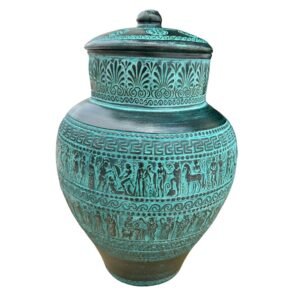
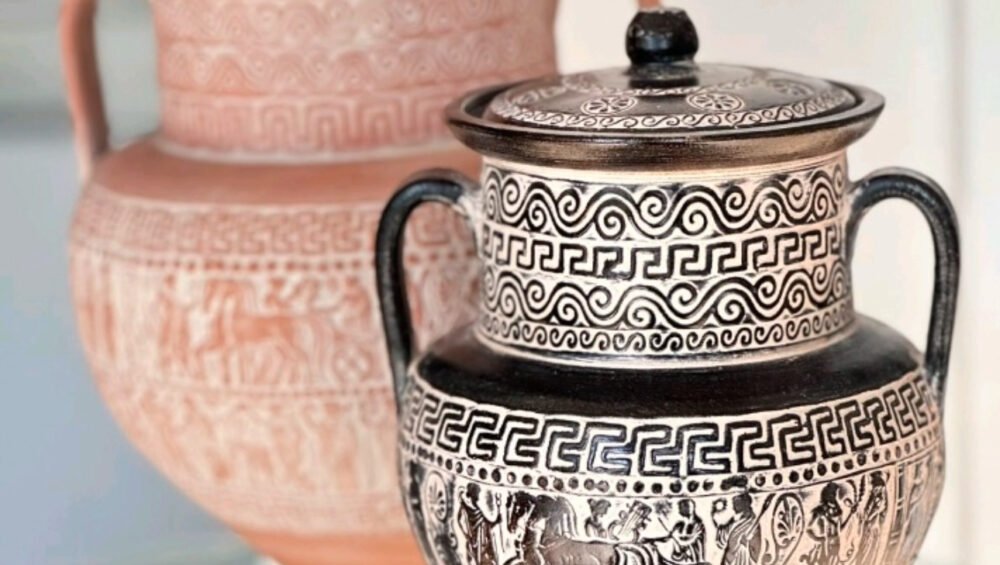
The handmade ones urns they are not production line products.

Craftsmen create each urn with knowledge and experience that have been passed down from generation to generation for centuries. They work with wisdom, passion and love, and take care of each handmade urn individually.

Each urn

  • presents small variations, because it remains unique in the world
  • bears the imprint of the creator and the seal of handmade
  • It is always different from any other, because the craftsman makes it one by one by hand, 14 times!


This means something simple but profound:

Each urn stands out. And its material conveys a unique, living energy to accommodate the person you loved.


Ceramic urns in Greece – a centuries-old tradition

Greece has a deep connection with pottery. From ancient times to the present day, people have cultivated the art of ceramics and associated it with their cultural identity.

Craftsmen today continue this path.

Ceramic urns:

  • combine durability and aesthetics
  • maintain traditional techniques
  • exude timelessness and the natural energy of the material

They are not just objects. They continue a living tradition.

As we say: «"Whatever we make with our hands, we keep in our hearts.".

Advantages of handmade urns

When you choose a handmade urn, you are not just choosing aesthetics. You are making room for memory, love, and nostalgia.

The main advantages:✔ Offers high quality construction✔ Withstands time✔ Stands out with a unique design✔ Conveys strong emotional value✔ Acquires the value of a work of art

Unlike mass-produced products, here the creator takes care of every detail. He processes the urn up to 14 times by hand until it reaches its final form.

Why quality matters in choice

When you're looking for an urn, you often think about the price. It's natural.

But quality determines real value.

A quality ceramic urn:

  • preserved in time
  • does not deteriorate
  • offers aesthetic harmony

And above all: it gives you the certainty that you are honoring the person hosting you.

How to choose a handmade urn

You don't follow rules. You listen to yourself.

However, you can focus on key points:

  • Material (ceramics offer timelessness)
  • Design (simple or symbolic)
  • Build quality
  • Feeling that creates you

If something brings you peace, that's what drives you.

The emotional dimension of choice

Here lies the essence.

You don't choose an urn based on technical criteria. You choose with your heart.

You make a silent decision that you don't easily explain.

As we say: «"Important choices are not explained; we feel them.".

Frequently asked questions

Why choose a handmade urn?; Because it holds a unique character and greater sentimental value.

Do ceramic urns last?; Yes, when craftsmen build them correctly, they stand the test of time.

Are there handmade urns in Greece?; Yes, and they are among the most authentic choices, as in tefrodoxoi.gr.

Handmade urns are not just a choice. They are a way of life.

You show that you do not treat memory as something formal, but as something living.

Because in the end: the value is not hidden in the object. You create it, through the meaning you give it, hosting the soul you loved.